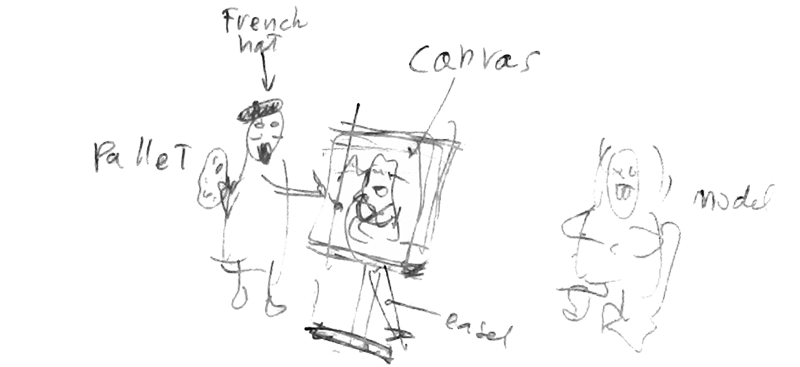
There is one word that, in my experience, every student in former Soviet Union countries and that part of central Asia will mispronounce. It doesn’t matter whether they are advanced or beginner, great at speaking or utterly laconic.
Each and all of them will pronounce the word “clothes” as /ˈkloʊðɪz/, only slightly differently from the word “closes” (/ˈkloʊsɪz/), as in “she closes”. *
It is one of those pronunciation errors which seems to be so confidently imparted from the teachers in school, it is very hard to eradicate, especially in adult classes.
To try and overcome the issue, I got into the habit of systematically correcting this error while the students are speaking, in the hope that the feeling of annoyance caused by the interruption would crawl down into the secret part of their brain where the mistake hid.
Seeing that this wouldn’t work, I started to periodically act a little skit in front of the door:
“I close the door”, I would say, “she closes the door. (opening and closing the door like an idiot) Say like the first, not like the second!”
One day not long ago during one of my YL teenager classes I came up with a tongue twister in order to help against this pronunciation obstacle. It’s on the whiteboard of that day:
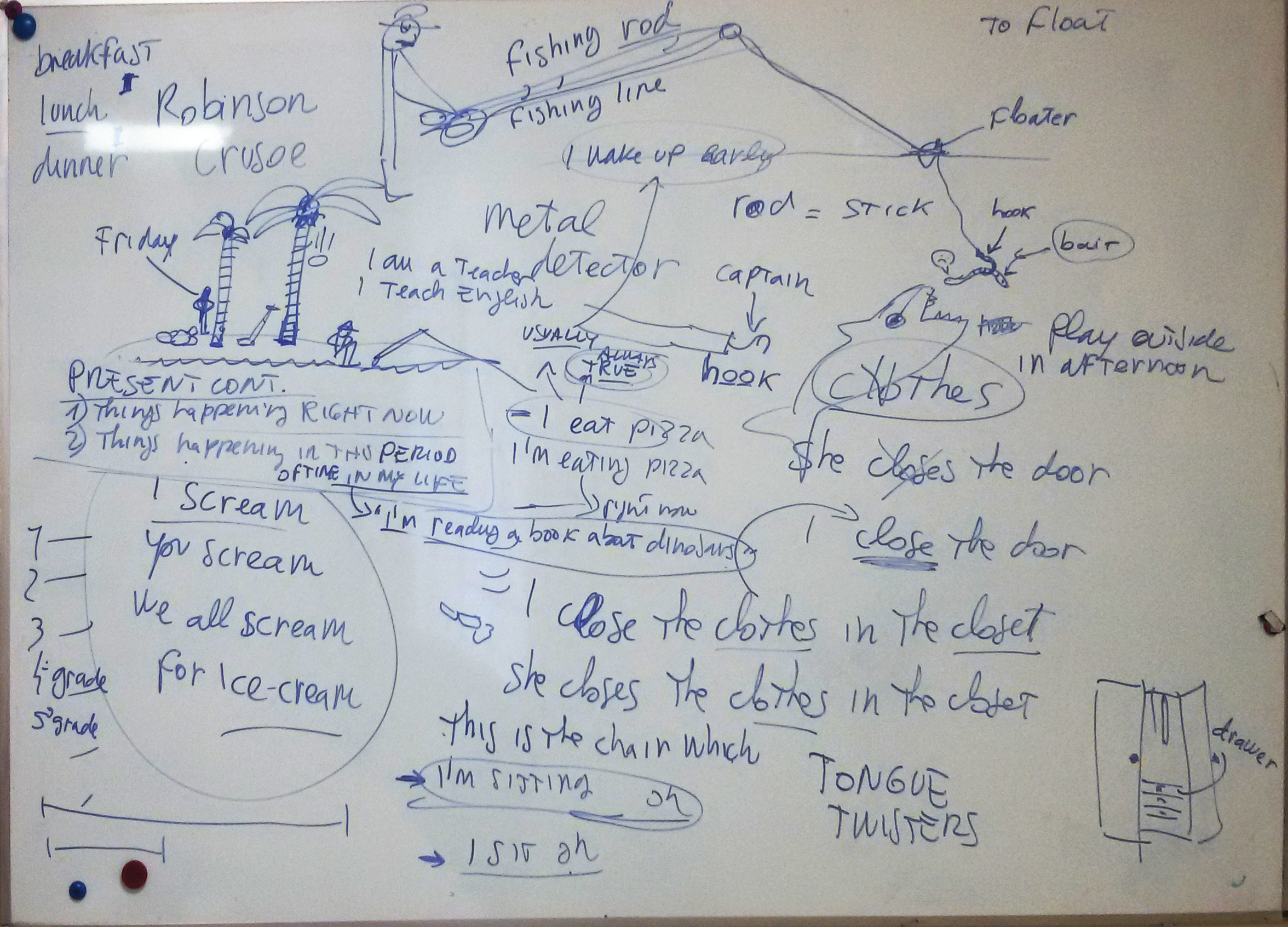
As you can see the rest of the lesson traveled from fishing to Robinson Crusoe, from metal detectors to the present continuous. I don’t entirely remember why. But I know that the “I scream you scream” pun I got from this:
* phonetic transcription provided by phonetizer.com (yes I cheated)