[continued from the first part]
So one day we looked at this (from the book IELTS Masterclass):
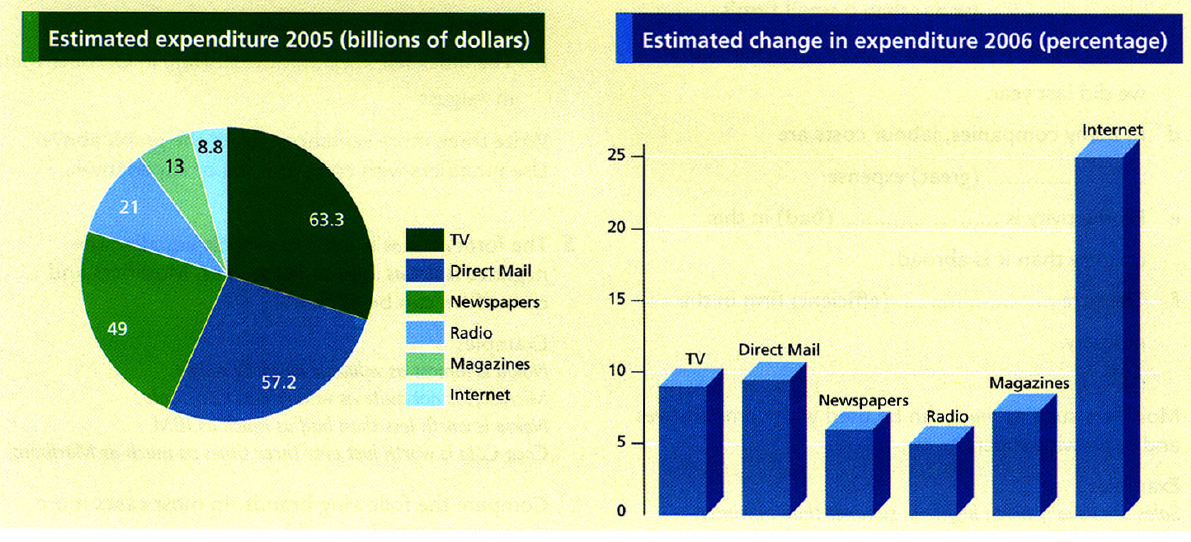
The charts illustrates spending on advertising across different media sources, so the emphasis was about numbers to express expenditure, proportions, preference, etc.
After a bit of vocabulary clarification, and a few sentence samples, the students were put into groups and given one of the charts, for which they had to provide the best possible written description. The groups were then mixed and the charts compared verbally. After a bit of feedback the students were given 12! minutes (not 20, because the thinking had already been done, and also because this class had the tendency to write too much) to actually write the task. So far so good, although of course they don’t like this task. Nobody does. The results aren’t exciting no matter how much craft you possess.
Another day, a different chart. This time from Cambridge IELTS 8:
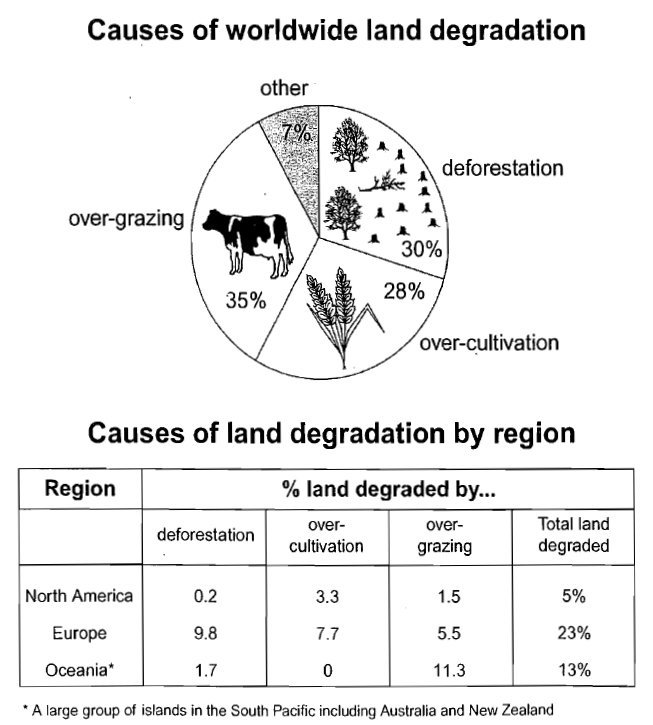
We focused this time on consumption, degradation, eating habits, overuse etc.
Another day, it was this set of charts, from IELTS 9:
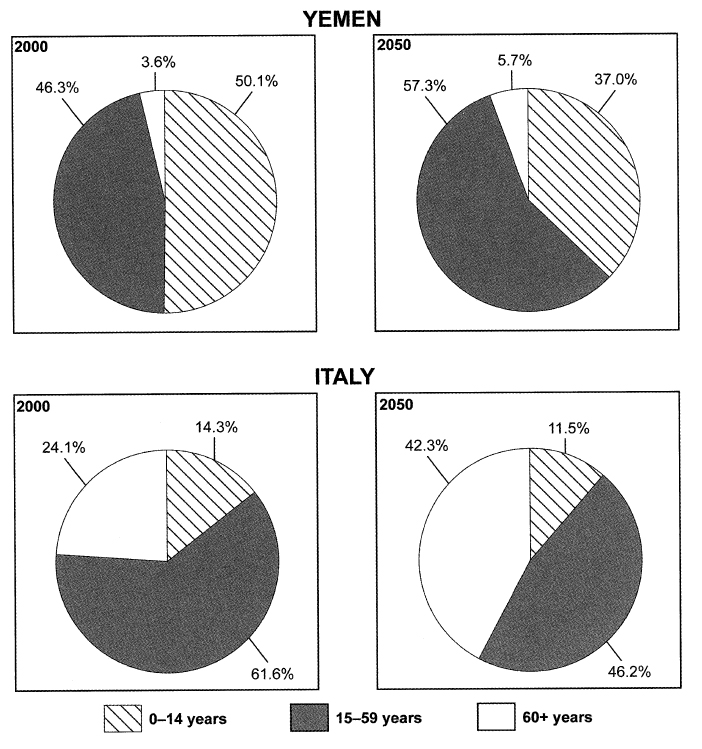
Even without including the task instructions, it appears evident that these charts are describing age groups in two different countries. However, because we teach the IELTS exam, but we have no time to actually teach why charts such as these exist, when and how they are used etcetera, they are perceived by some students as mostly sadistic ways to test the students’ understanding of numbers inside and around differently shaped graphs, despite the graphs actually having no meaning of their own.
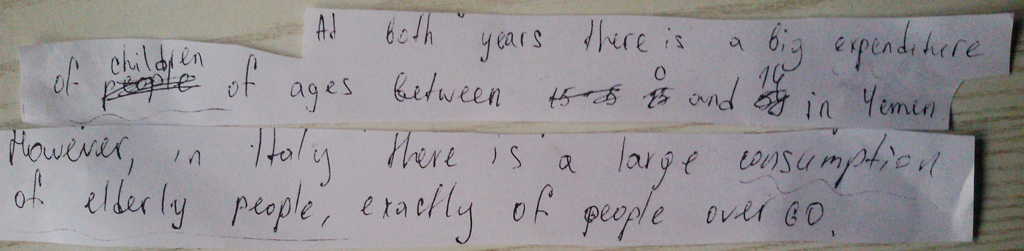
It is not always easy or obvious to make the students think differently, and the results can be sometimes discouraging or hilarious, depending on your outlook on that particular day. So this was the result after our time spent on writing task 1 (right from my locker where I keep the trophies):
Tag: IELTS
a big expenditure of children and a large consumption of elderly people
Teaching IELTS rather than teaching English is ultimately a contradiction. This exam tests the level of English after all, and the student’s ability to use it in a purposeful way; just learning the test format inside out seems to be a desperate, uncool way of cheating — yet we make the whole experience into exactly this, a test about the test itself and our understanding of the different parts of the test and our feelings on the day of the test and this is how we pass the IELTS test, voilà.
Maybe this happens because the IELTS format is so eternally rigid and presents no surprises. It is a bit like working out, doing always the same sets everyday. Every trainer will tell you that this does not improve your fitness, because the muscles will do their best to save energy once they have memory of the tasks that await them: you’ve got to “fool” your muscles if you want them to become stronger. Feeling that your exercises come easier and easier is not a good thing either. Basically you’re still weak, but you’re in shape enough to do the exercise (that Senifeld bit coming to mind).
Especially the so called “IELTS Foundation” class is a bit of a joke, its only purpose being the business need to catch delusional students who otherwise would roam towards other schools. There shouldn’t be an IELTS Foundation class. Instead, the hopes of the students should be crushed for their own good, and they should be sent to a good General English class to do some time. Although, the class has a purpose for the student too, because at that stage they usually need someone to blame for not entering that University, and your local English school will just do.
Of course it’s crucial for the students to know how the exam works, but as a teacher you cannot help but feeling that this should happen within a larger context where English learning and exposure to English culture are the real focus of your time with the students. More importantly, there should be a context in where students learn to use their imagination critically. Soon they will face an examiner and will have to discuss intelligently how the Internet has changed relationships, or what role will pets play in the future; why people cannot stop using cars or why food is the last remaining bit of national culture left, which is why we are all so ridiculously attached to it. That subconscious, instantaneous, defensive answer “what do I know, I’m barely out of High School” will most definitely not cut it.
Instead even your average IELTS “Masterclass” group (no name was more inappropriate, since it gives the student the illusion of being part of a specially selected bunch of next-to-be IELTS wizards) is made of students with little or no experience in using English in real life, let alone in an academic context, who only have two or three months to get into that University and have exactly the right amount of desperation to get their thinking all fogged.
The web is full of tips and a large industry of book publishing thrives on this. Yet the so called “exam techniques” are often very arbitrary in that they focus on aspects that can be obvious for one student, unheard of for another, and which can seriously hinder candidates who have their own personal or even creative way of looking at a task. Sometimes they are offensively disingenuous, for example when they pretend to teach the student how to “listen for the answer” in an IELTS listening by considering the stress, or the appearance of certain keywords. A confusing waste of time.
What will you teach them then, in those three “intensive” months?
What you do, once they are familiarized with the format, is for the most part to give them vocabulary sets and interesting ways to practice them, help them to organize their writing and speech and, ultimately, do quite a bit of IELTS practice in class, since you know they will not do it at home as they should. No, there will be no Eureka moment to look forward to.
It’s not the best premise for good teaching. However as a teacher you do it and of course, as with everything, useful things can come out of it. Which brings me to the title of this IELTS post.
[continues in the second part]